

How it runs: Triggered. An automation runs when an incident thread is closed, and you can also ask Hops directly.
What it does
- Builds the timeline from real sources. Hops uses Sentry errors, Datadog monitors and the messages in the incident Slack thread.
- Follows your template. Sections are summary, impact, timeline, root cause, what went well and follow-ups with owners.
- Stays blameless. The draft describes systems and decisions, not people.
- Marks what is unconfirmed. Guesses are labeled so the team can confirm them in review.
- Proposes follow-ups. Action items are drafted with owners and can be filed in Linear or Jira once approved.
Ask Hops
Copy a prompt into any chat with Hops, or mention@Hops in a Space.
Draft postmortem for CHECKOUT-482 is ready:
- Impact: checkout failed for about 11% of orders over 38 minutes.
- Root cause: a connection pool limit hit after the 09:40 deploy (unconfirmed).
- Follow-ups: 4 drafted with owners, none filed yet.
- 2 timeline entries need confirmation from the incident lead.
What you get
- A post the morning after. At 9am the day after the thread closes, the draft is posted in the Space.
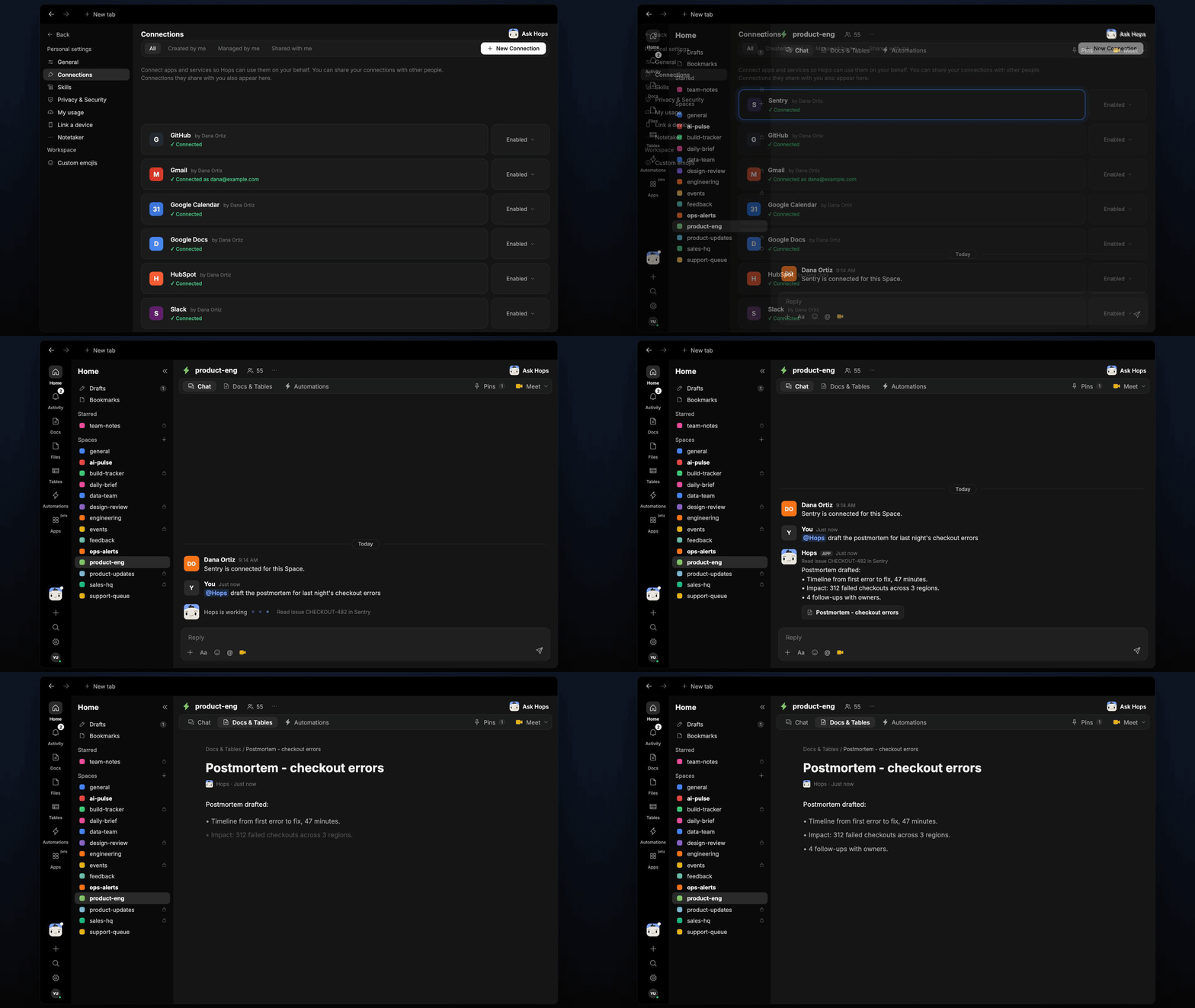
- A saved Doc. The postmortem is saved as a Doc in Docs, using your template.
- Optional follow-up tickets. Hops can draft the follow-ups as Linear or Jira issues once you approve them.
Connections needed
Connect these apps. Each card opens Connections in the app.Sentry
Errors and event timestamps.
Slack
The incident thread.
Linear
Follow-up issues (or Jira).
Jira
Follow-up issues (or Linear).
Datadog
Monitors and metrics during the incident.
Set it up
1
Connect your apps
Connect Sentry, Slack, Linear or Jira, and Datadog in Connections.See Connections.
2
Create the Space
Create a product-eng Space and pin your postmortem template in Space context.See Spaces and Space context.
3
Add the skill
4
Trigger it
Create an automation that runs when an incident thread is closed. The next morning at 9am it posts the draft to the Space and saves it as a Doc in Docs.See Automation.