

How it runs: Scheduled. An automation runs every weekday at 9am in the first week of the month, posts open close tasks and updates the close tracker Table. You can also ask Hops any time.
What it does
- Tracks every close task. Hops keeps the checklist from Space context with an owner and status for each task.
- Compares actuals to budget. It reads the ledger in QuickBooks, Xero or NetSuite and the budget in Google Sheets.
- Flags variances over 10%. Each one gets a line of commentary citing the transactions behind it.
- Lists what is still open. Each morning it names the tasks that are late or blocked and who owns them.
- Keeps the tracker current. The close tracker Table updates on every run.
Ask Hops
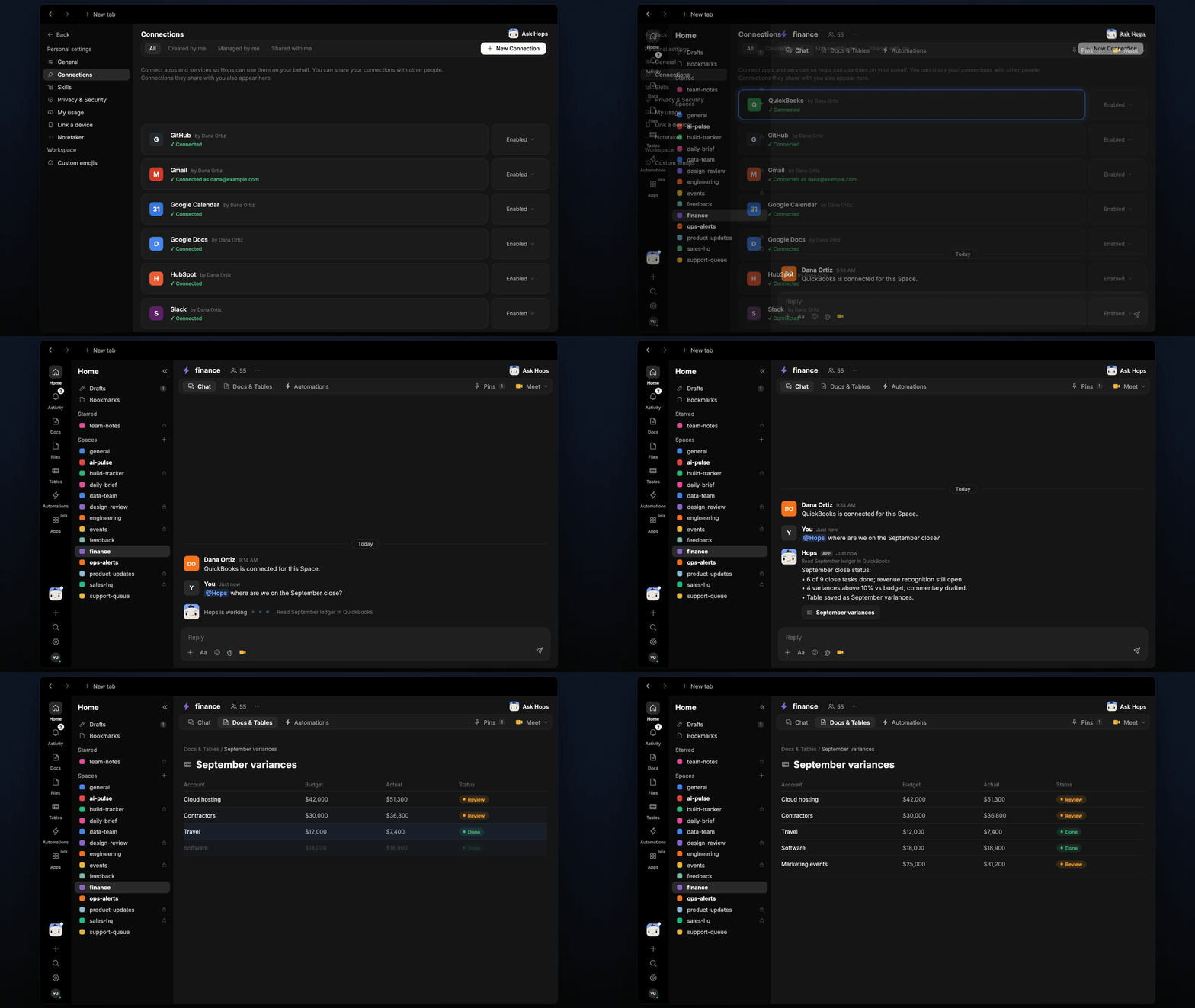
Copy a prompt into any chat with Hops, or mention@Hops in a Space.
September close, day 3:
- 14 of 19 tasks done; bank reconciliation and accruals are open.
- Software is 18% over budget, driven by 3 annual renewals.
- Payroll liabilities are not reconciled; owner Priya Nair.
What you get
- An answer in chat, in the same thread, whenever you ask.
- A daily Slack post during close with the open tasks, owners and blockers.
- A close tracker Table in Tables of the Space, updated each run.
- A variance commentary Doc in Docs with one line per flagged variance.
Connections needed
Connect these apps. Each card opens Connections in the app.QuickBooks
The ledger (or Xero or NetSuite).
Google Sheets
The budget to compare against.
Slack
Posts open close tasks to the finance channel.
Set it up
1
Create the Space
Create a finance Space. Pin the close checklist and variance threshold in Space context.See Spaces and Space context.
2
Connect your apps
Connect the apps above in Connections.See Connections.
3
Add the skill
4
Schedule it
Every weekday at 9am in the first week of the month, Hops posts open close tasks to the finance channel, updates the close tracker Table and saves the commentary as a Doc.See Automation.